Curing and the variance
A variance from the regulatory authority comes before curing food (3-502.11(B)), with a HACCP plan (8-201.13).
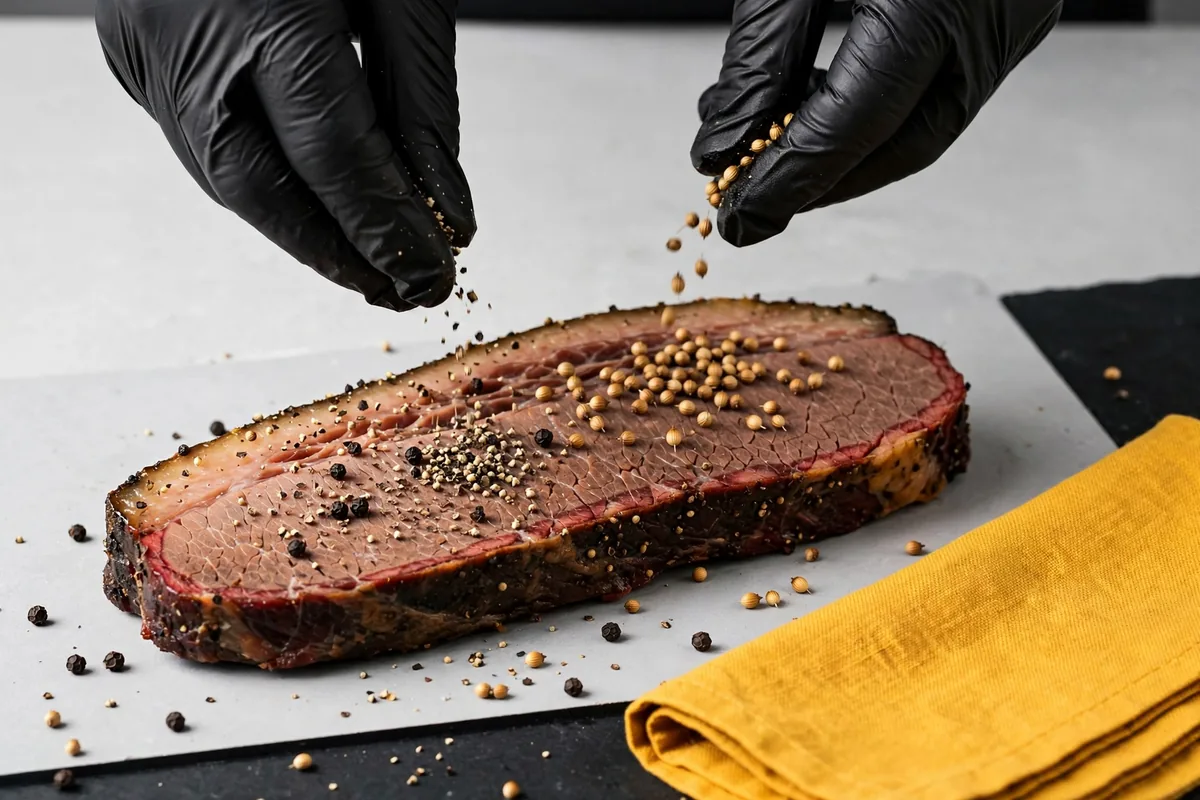
Three ways a batch starts
Wet brine
Cured in brine under refrigeration.
Needs a variance and a HACCP plan.
Dry cure
Rubbed with cure and held under refrigeration.
Needs a variance and a HACCP plan.
Bought cured
Already cured by an inspected plant.
No variance needed for the cure.
Variance and HACCP plan for curing
A food establishment gets a variance before curing food (Food Code 3-502.11(B)) and submits a HACCP plan with it (8-201.13). Not needed for meat bought already cured from an inspected plant.
The regulatory authority (Boston Inspectional Services)
Sources: FDA Food Code 2013 (adopted in Massachusetts by 105 CMR 590.000).
Not in a home kitchen
Food prepared in a private home may not be used in a food establishment except as 105 CMR 590 provides (590.003); Boston retail residential kitchens may not make raw or heat-treated meat.
Sources: 105 CMR 590.000, Minimum Sanitation Standards for Food Establishments (Cornell LII copy); City of Boston, Retail residential kitchens.
In Batch Log
A wet or dry cure records the day it started, the planned days and the day it ended; the batch shows "Curing" until then. A bought-cured batch goes straight to the cook. The Permits tab keeps the variance and the HACCP plan with their dates when curing in house is chosen.